
Overview
Chronic obstructive pulmonary disease (COPD) is a common disease that results in chronic pulmonary inflammation and progressive airflow limitation. It is the fourth leading cause of death, accounting for 6% of deaths worldwide in 2012. In the United States, COPD is responsible for over $50 billion in annual direct and indirect costs and is second only to ischemic heart disease in the burden of disability.1
Manifestations of COPD include dyspnea, poor exercise tolerance, chronic cough (with or without sputum production), wheezing, respiratory failure, and cor pulmonale. Genetic predisposition, concomitant chronic diseases, socio-economic, and environmental factors may contribute to the development and severity of COPD in individual patients.1
The text included in this document based on the 2020 Global Strategy for the Diagnosis, Management, and Prevention of COPD, published by the Global Initiative for Chronic Obstructive Lung Disease (GOLD). 1
Figure 1. Diagnosis and Management of COPD
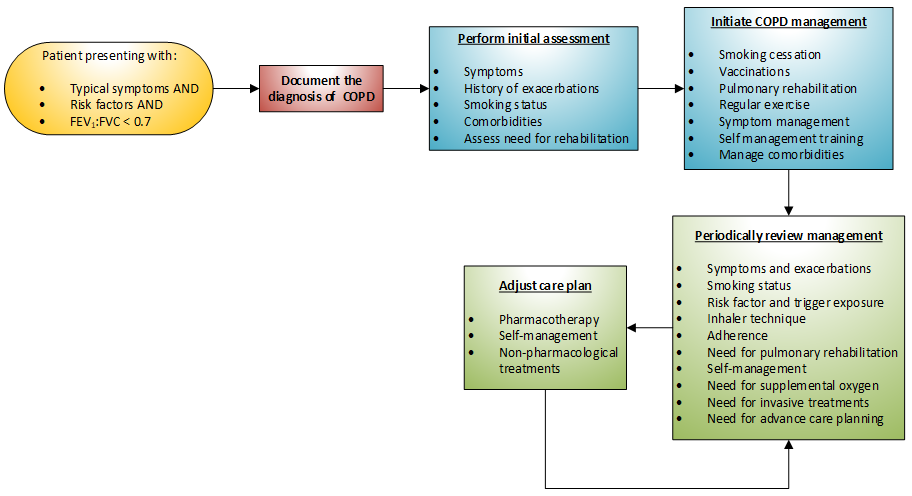
Adapted from: GOLD guidelines. URL: http://www.goldcopd.org/. Updated: 2020. Accessed: November 13, 2019.
Abbreviations: COPD = chronic obstructive pulmonary disease, FEV1 = forced expiratory volume in 1 second, FVC = forced vital capacity
Key Points
Standard of Care Recommendations
- Assessment Recommendations
- Treatment Recommendations
Most Important Considerations
- Encouraging tobacco use cessation is one of the few interventions that can alter the natural history of COPD.
- Pulmonary rehabilitation is the most effective intervention for improving symptoms and has significant benefits that persist across different severities of COPD and well beyond the immediate rehabilitation period.
- The GOLD guidelines recommend a combined assessment based on symptoms, FEV1, and exacerbation risk; however, such an approach has not been shown to improve meaningful outcomes.
- GOLD recommends bronchodilators first line for the initial treatment of COPD.
- GOLD recommends modifying COPD treatment based on a “review, assess, then adjust” process.
- Add-on therapy with multiple medications is associated with high costs and adverse events, but has not been shown to consistently improve outcomes.
- Palliative, end-of-life, and hospice care are important considerations in all patients with a life-limiting illness such as COPD.
- Self-management of exacerbations using a mutually agreed upon action plans may reduce the risk of hospitalization.
- Pulmonary rehabilitation can reduce the risk of re-hospitalization and death among patients admitted with a COPD exacerbation.
Coding Considerations
Appendix
References
Disclaimers/Contact Us